Ganesh Chaturthi 2026: Date, Puja Muhurat, Vidhi, History, Significance, & Visarjan
23 July 2026 by admin

Ganesh Chaturthi 2026: Complete Guide
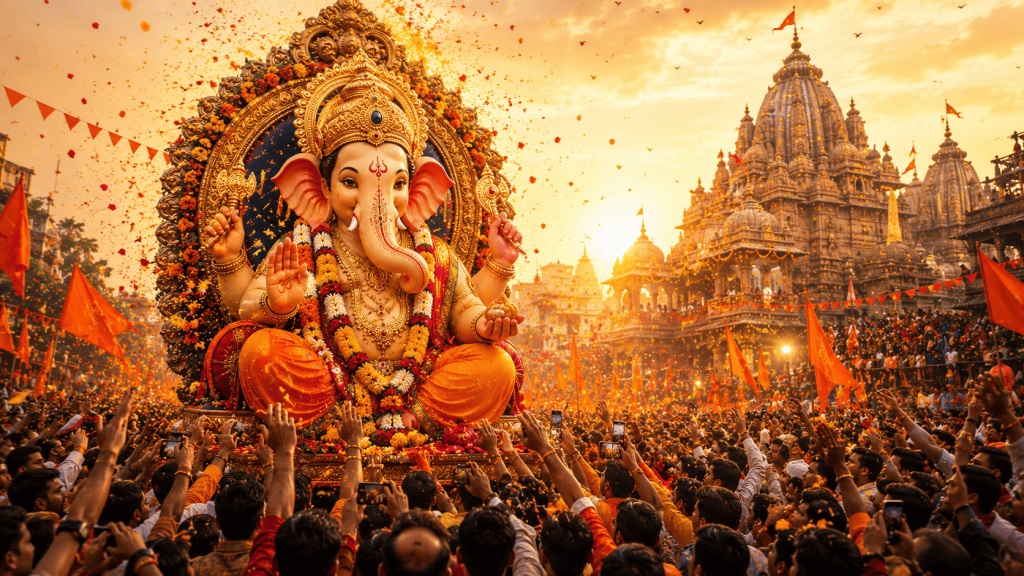
Ganesh Chaturthi 2026 is one of the most joyful and widely celebrated festivals in India. It marks the birth anniversary of Lord Ganesha, the remover of obstacles, the god of wisdom, prosperity, knowledge, and new beginnings. Millions of devotees welcome Lord Ganesha into their homes and public pandals with devotion, prayers, music, and cultural celebrations.
Every year, the festival begins on the Shukla Paksha Chaturthi of the Bhadrapada month according to the Hindu calendar. Devotees install beautifully crafted idols of Lord Ganesha, perform daily worship, offer sweets like modak, chant sacred mantras, and conclude the festival with the immersion ceremony known as Ganesh Visarjan.
Ganesh Chaturthi 2026 is much more than a religious celebration. It represents faith, unity, gratitude, and the victory of wisdom over ignorance. Families come together, communities organize grand celebrations, and devotees seek Lord Ganesha’s blessings for success, happiness, and peace.
In this detailed guide, you will learn everything about Ganesh Chaturthi 2026, including its date, puja muhurat, history, significance, rituals, puja vidhi, fasting rules, visarjan process, and much more.
Ganesh Chaturthi 2026 Date
According to the Hindu Panchang, Ganesh Chaturthi 2026 will be celebrated on Monday, 14 September 2026.
The festival begins with the installation of Lord Ganesha’s idol, also called Ganesh Sthapana or Pran Pratishtha. Devotees perform special prayers and worship Lord Ganesha with complete devotion.
The celebration continues for different durations depending on family traditions and regional customs.
Common visarjan days include:
- One and a half day
- Three days
- Five days
- Seven days
- Ten days (Anant Chaturdashi)
Many households perform Ganesh Visarjan after one or three days, while large community celebrations generally continue for ten days.
Ganesh Chaturthi 2026 Puja Muhurat
The most auspicious time for worship is during the Madhyahna Muhurat, which is traditionally considered ideal for Lord Ganesha’s birth celebration.
Important Timings
Festival: Ganesh Chaturthi 2026
Date: Monday, 14 September 2026
Recommended Puja Time: Madhyahna Muhurat (Exact timings should be confirmed according to your city through the local Panchang.)
Since sunrise and sunset vary by location, devotees should follow their regional Panchang for accurate puja timings.
Ganesh Chaturthi 2026 Tithi
Ganesh Chaturthi 2026 is observed during:
- Month: Bhadrapada
- Paksha: Shukla Paksha
- Tithi: Chaturthi
The Chaturthi Tithi holds special importance because Hindu scriptures describe it as the divine appearance day of Lord Ganesha.
Who Is Lord Ganesha?
Lord Ganesha is among the most beloved deities in Sanatan Dharma. He is worshipped before beginning any new task because devotees believe his blessings remove obstacles and bring success.
Lord Ganesha is known by many names, including:
- Ganapati
- Vinayaka
- Vighnaharta
- Ekadanta
- Lambodara
- Gajanana
- Sumukha
- Siddhivinayaka
Every name highlights a unique quality of Lord Ganesha and reminds devotees of his compassion, intelligence, and divine protection.
He is the son of Lord Shiva and Goddess Parvati and the elder brother of Lord Kartikeya according to most Hindu traditions.
Why Is Lord Ganesha Worshipped First?
One of the most common questions among devotees is why every Hindu ritual begins with the worship of Lord Ganesha.
According to Hindu scriptures, Lord Shiva granted Lord Ganesha the blessing that no religious ceremony, wedding, yajna, pilgrimage, or auspicious event would begin without first invoking him.
This blessing established Lord Ganesha as the first deity to be worshipped in nearly every Hindu ritual.
People seek his blessings before:
- Starting a business
- Buying a new home
- Marriage ceremonies
- Housewarming
- Beginning studies
- Examinations
- New jobs
- Vehicle purchases
- Religious ceremonies
- Travel
His worship symbolizes the removal of obstacles and the successful completion of all endeavors.
Birth Story of Lord Ganesha
The birth of Lord Ganesha is one of the most fascinating stories in Hindu mythology.
According to the Shiva Purana, Goddess Parvati wished to bathe in privacy while Lord Shiva was away. She created a young boy using sandalwood paste (some traditions mention turmeric paste mixed with her divine energy) and breathed life into him.
She instructed the boy to guard the entrance and allow no one inside.
After some time, Lord Shiva returned to Mount Kailash and attempted to enter. The young guardian, unaware of Shiva’s identity, stopped him from entering.
A fierce battle followed.
Despite repeated warnings from Shiva’s attendants and the gods, the young boy remained loyal to Goddess Parvati’s command.
Finally, Lord Shiva became angry and severed the boy’s head with his trident.
When Goddess Parvati discovered what had happened, she was overwhelmed with grief and anger. She revealed that the boy was her son.
To calm Goddess Parvati and restore balance, Lord Shiva ordered his followers to bring the head of the first living creature found facing north.
They found a young elephant.
Lord Shiva placed the elephant’s head upon the boy’s body and restored him to life.
He then blessed him with supreme honor and declared:
“You shall be worshipped before every deity, and all auspicious works shall begin only after invoking you.”
From that day onward, the child became known as Lord Ganesha, the remover of obstacles and the lord of wisdom.
Symbolism of Lord Ganesha
Every part of Lord Ganesha’s appearance carries profound spiritual meaning.
Elephant Head
The elephant symbolizes wisdom, intelligence, strength, and calmness. It teaches devotees to remain patient while making thoughtful decisions.
Large Ears
Large ears remind us to listen more and speak less. A wise person hears everyone before making judgments.
Small Eyes
Small eyes represent concentration, focus, and the ability to see beyond distractions.
Long Trunk
The trunk symbolizes adaptability and efficiency. It can perform delicate tasks and also uproot large trees, showing that true strength includes flexibility.
Large Belly
Lord Ganesha’s belly represents the ability to peacefully accept both happiness and challenges in life.
Broken Tusk
The broken tusk teaches sacrifice and dedication. According to tradition, Lord Ganesha broke his tusk to continue writing the Mahabharata without interruption while serving Sage Ved Vyasa.
Mouse (Mushak)
The mouse symbolizes uncontrolled desires. Sitting upon it shows that wisdom can control even the smallest impulses.
Modak
The sweet modak represents the bliss that comes through spiritual knowledge and self-realization.
Why Is Ganesh Chaturthi Celebrated?
Ganesh Chaturthi celebrates the divine birth of Lord Ganesha and reminds devotees of several timeless values.
The festival teaches:
- Wisdom is greater than physical strength.
- Humility leads to true greatness.
- Devotion overcomes difficulties.
- Knowledge removes ignorance.
- Patience brings success.
- Faith strengthens the mind.
- Good actions create lasting happiness.
The celebration also strengthens family bonds and encourages community participation through prayers, charity, cultural events, and devotional music.
Spiritual Significance of Ganesh Chaturthi
Ganesh Chaturthi holds deep spiritual importance in Sanatan Dharma.
The festival reminds devotees to begin every new chapter in life with faith and humility.
Lord Ganesha represents:
- New beginnings
- Success
- Knowledge
- Intelligence
- Prosperity
- Discipline
- Inner peace
- Protection from obstacles
Many devotees believe that sincere worship during Ganesh Chaturthi helps remove negativity, increase confidence, and bring clarity to life’s decisions.
The festival also encourages gratitude toward parents, teachers, nature, and society. It inspires devotees to cultivate patience, compassion, and self-control while strengthening their spiritual connection with the Divine.

History of Ganesh Chaturthi
The worship of Lord Ganesha has existed for thousands of years in Sanatan Dharma. Ancient scriptures such as the Ganapati Atharvashirsha, Mudgala Purana, Ganesha Purana, Shiva Purana, and Skanda Purana mention Lord Ganesha as the remover of obstacles and the deity of wisdom and auspicious beginnings.
Earlier, Ganesh Chaturthi was primarily celebrated within homes. Families would install a clay idol of Lord Ganesha, perform daily prayers, and immerse the idol after one, three, five, seven, or ten days.
Over time, the festival evolved into one of India’s largest public celebrations, bringing together people from all walks of life.
Bal Gangadhar Tilak and the Public Celebration of Ganesh Chaturthi
One of the most important chapters in the history of Ganesh Chaturthi is associated with Lokmanya Bal Gangadhar Tilak.
During British rule, large public gatherings were often restricted. In 1893, Tilak encouraged people to celebrate Ganesh Chaturthi as a public festival rather than only at home. His vision was to unite society through devotion, cultural activities, and patriotic spirit.
Public Ganesh pandals became centers for:
- Bhajans and kirtans
- Spiritual discourses
- Community service
- Cultural performances
- Social awareness programs
- National unity
This initiative transformed Ganesh Chaturthi into a festival that promoted both spiritual devotion and social harmony. Even today, large public celebrations across Maharashtra and other parts of India continue this tradition.
Importance of Ganesh Chaturthi in Sanatan Dharma
Ganesh Chaturthi 2026 is much more than a festival. It is a reminder that every new beginning should start with humility, faith, and prayer.
In Sanatan Dharma, Lord Ganesha symbolizes:
- Wisdom before action
- Knowledge over ignorance
- Patience over haste
- Discipline over distraction
- Faith during challenges
- Prosperity through righteous actions
Devotees believe that sincere worship of Lord Ganesha helps remove obstacles from personal, professional, and spiritual life.
The festival also teaches that success should be accompanied by gratitude and compassion.
Why Is Ganesh Sthapana Performed?
The installation of Lord Ganesha’s idol is called Ganesh Sthapana.
It marks the ceremonial welcome of Lord Ganesha into the home or community. During this ritual, devotees invite the divine presence of Lord Ganesha and seek his blessings.
Many families perform Ganesh Sthapana during the Madhyahna Muhurat, which is considered the most auspicious period for worship.
The idol is usually placed on a clean wooden platform decorated with:
- Red or yellow cloth
- Flowers
- Mango leaves
- Banana leaves
- Rangoli
- Diyas
- Kalash
The worship area should remain clean and peaceful throughout the festival.
What Is Pran Pratishtha?
Pran Pratishtha is one of the most sacred rituals of Ganesh Chaturthi 2026.
The term means “establishing the divine life force.”
During this ceremony, devotees respectfully invite Lord Ganesha to reside in the idol for the duration of the festival.
Traditionally, priests perform this ritual by chanting Vedic mantras. Many families also perform a simplified version at home with devotion and sincerity.
After Pran Pratishtha, the idol is treated with great respect as the living presence of Lord Ganesha.
Ganesh Chaturthi 2026 Puja Samagri List
Before beginning the worship, gather all the required puja items.
Essential Puja Items
- Clay idol of Lord Ganesha
- Wooden chowki
- Clean red or yellow cloth
- Kalash
- Coconut
- Mango leaves
- Rice (Akshat)
- Kumkum
- Turmeric
- Sandalwood paste
- Sacred thread (Mouli)
- Incense sticks
- Camphor
- Ghee lamp
- Cotton wicks
- Panchamrit
- Ganga Jal
- Fresh flowers
- Garland
- Durva grass (21 blades preferred)
- Betel leaves
- Betel nuts
- Fruits
- Modak
- Ladoo
- Banana
- Dry fruits
- Honey
- Milk
- Curd
- Ghee
- Sugar
- Tulsi is generally not offered to Lord Ganesha during Ganesh Chaturthi, as traditional beliefs advise against it.
Having all the puja items ready before beginning the worship helps ensure a smooth and focused ceremony.
Why Is Durva Grass Offered to Lord Ganesha?
Durva grass holds special importance in the worship of Lord Ganesha.
According to Hindu tradition, Lord Ganesha is pleased by the offering of fresh Durva. It symbolizes purity, simplicity, and devotion.
Many devotees offer 21 blades of Durva grass, as this number is considered auspicious in Ganesh worship.
Why Is Modak Lord Ganesha’s Favorite Sweet?
Modak is considered the favorite offering of Lord Ganesha.
According to tradition, Goddess Parvati prepared modaks for the gods. Lord Ganesha appreciated the sweet so much that it became his preferred bhog.
The outer layer represents discipline, while the sweet filling symbolizes the joy and wisdom gained through spiritual practice.
Offering modaks during Ganesh Chaturthi expresses love, gratitude, and devotion.
Step-by-Step Ganesh Chaturthi Puja Vidhi
Perform the puja with sincerity and a peaceful mind.
Step 1: Clean the House
Clean the worship area thoroughly before beginning the festival.
Decorate the entrance with flowers, rangoli, and diyas.
Step 2: Prepare the Altar
Place a clean wooden platform in the puja area.
Cover it with a fresh red or yellow cloth.
Position Lord Ganesha’s idol in the center.
Step 3: Place the Kalash
Fill a Kalash with clean water.
Place mango leaves around its opening.
Keep a coconut on top.
The Kalash represents prosperity, purity, and divine blessings.
Step 4: Invoke Lord Ganesha
Fold your hands and invite Lord Ganesha to bless your home.
Pray with complete devotion and gratitude.
Step 5: Perform Pran Pratishtha
If you know the traditional mantras, chant them during the ritual.
Otherwise, sincerely pray to Lord Ganesha and request his divine presence in the idol.
Faith and devotion remain the most important elements.
Step 6: Offer Panchamrit
Prepare Panchamrit using:
- Milk
- Curd
- Honey
- Ghee
- Sugar
Offer it symbolically to Lord Ganesha.
Some families also perform a ceremonial bath (Abhishek) using Panchamrit followed by clean water.
Step 7: Apply Tilak
Apply sandalwood paste and kumkum to the forehead of Lord Ganesha.
Offer Akshat (rice grains).
Step 8: Offer Flowers
Offer fresh flowers and a beautiful garland.
Avoid using withered flowers.
Fresh offerings symbolize respect and devotion.
Step 9: Offer Durva Grass
Place 21 blades of Durva near Lord Ganesha.
This offering is believed to be especially dear to him.
Step 10: Offer Bhog
Offer:
- Modak
- Ladoo
- Fruits
- Coconut
- Dry fruits
Avoid tasting the bhog before offering it to the deity.
Step 11: Light the Lamp
Light a ghee lamp and incense sticks.
The light represents knowledge that removes ignorance.
Step 12: Chant Mantras
Recite Lord Ganesha’s sacred mantras with concentration.
Even simple chanting of “Om Gan Ganapataye Namah” with devotion is considered highly auspicious.
Step 13: Perform Aarti
Conclude the worship with Ganesh Aarti.
Family members usually participate together while singing devotional hymns.
Step 14: Seek Blessings
Bow before Lord Ganesha.
Pray for wisdom, health, peace, happiness, and success.
Distribute prasad among family members and visitors.
Shodashopachara Puja (16 Traditional Offerings)
Many devotees perform the Shodashopachara Puja, which consists of sixteen traditional offerings made to the deity.
These offerings generally include:
- Avahan (invocation)
- Asana (offering a seat)
- Padya (washing the feet)
- Arghya (offering respectful water)
- Achamaniya (water for sipping)
- Snana (ritual bath)
- Vastra (offering clothes)
- Yajnopavita (sacred thread)
- Gandha (sandalwood paste)
- Pushpa (flowers)
- Dhoop (incense)
- Deep (lamp)
- Naivedya (food offering)
- Tambula (betel leaves and nuts)
- Aarti
- Pradakshina and Namaskar (circumambulation and prostration)
Even if all sixteen offerings are not possible at home, sincere devotion remains the heart of the worship.
Common Mistakes to Avoid During Ganesh Puja
While performing Ganesh Chaturthi rituals, devotees should keep a few simple points in mind:
- Avoid placing the idol directly on the floor.
- Use a clean and dedicated space for worship.
- Do not offer stale flowers or spoiled food.
- Avoid tasting the bhog before offering it.
- Keep the puja area clean throughout the festival.
- Follow local guidelines for idol immersion.
- Treat the idol with respect until Visarjan.
- Focus on devotion rather than elaborate decorations.
The essence of Ganesh Chaturthi lies in sincerity, discipline, and gratitude.

Ganesh Chaturthi Vrat (Fasting) Rules
Observing a fast during Ganesh Chaturthi 2026 is a sacred tradition followed by millions of devotees. The vrat is performed with devotion to seek Lord Ganesha’s blessings for wisdom, prosperity, good health, and the removal of obstacles.
Fasting is not only about avoiding certain foods. It also encourages self-discipline, purity of thought, and spiritual focus.
Who Can Observe the Fast?
Anyone can observe the Ganesh Chaturthi fast, including:
- Men
- Women
- Married couples
- Students
- Senior citizens (according to their health)
- Children (with guidance from elders)
Pregnant women, elderly devotees, and individuals with medical conditions should follow a diet suitable for their health and consult a healthcare professional if needed.
Types of Ganesh Chaturthi Fast
Different families follow different traditions.
Nirjala Vrat
Some devotees observe a complete fast without food or water until the puja is completed.
Phalahar Vrat
Many devotees consume fruits, milk, dry fruits, and vrat-friendly foods.
Satvik Meal
Some families perform the puja first and then eat one simple satvik meal during the day.
The method may differ, but devotion remains the most important aspect of the vrat.
Foods Allowed During the Fast
Depending on family traditions, devotees may consume:
- Fresh fruits
- Milk
- Curd
- Dry fruits
- Coconut water
- Makhana
- Sabudana
- Singhara flour
- Rajgira flour
- Sweet potatoes
- Rock salt (Sendha Namak)
Foods Generally Avoided
Many devotees avoid:
- Onion
- Garlic
- Regular table salt
- Non-vegetarian food
- Alcohol
- Processed food
- Tobacco
- Excessively spicy food
Traditions vary by region and family, so it is appropriate to follow your household customs.
Spiritual Meaning of Fasting
Fasting is considered a way to strengthen the mind and cultivate devotion.
It reminds devotees to:
- Practice self-control.
- Reduce distractions.
- Express gratitude.
- Focus on prayer.
- Develop patience.
- Purify thoughts.
The true purpose of a vrat is inner discipline rather than physical hardship.
Powerful Ganesh Mantras
Chanting Lord Ganesha’s mantras with sincerity is believed to bring peace, confidence, and positive energy.
Mantra
1. Om Gan Ganapataye Namah
ॐ गं गणपतये नमः
Meaning
I bow to Lord Ganesha, the remover of obstacles and the bestower of wisdom.
This is one of the most widely chanted Ganesh mantras and is suitable for daily recitation.
2. Vakratunda Mahakaya Mantra
Mantra
Vakratunda Mahakaya
Suryakoti Samaprabha
Nirvighnam Kurume Deva
Sarva Karyeshu Sarvada
Meaning
O Lord with the curved trunk and mighty form, whose brilliance equals millions of suns, kindly remove every obstacle from my work and bless me always.
This prayer is often recited before starting new ventures.
3. Ganesh Gayatri Mantra
Mantra
Om Ekadantaya Vidmahe
Vakratundaya Dheemahi
Tanno Danti Prachodayat
Meaning
May Lord Ganesha inspire our intellect and guide us toward wisdom.
4. Ganapati Atharvashirsha
The Ganapati Atharvashirsha is a revered Vedic hymn dedicated to Lord Ganesha. Many devotees recite it during Ganesh Chaturthi as part of their daily worship. If you are unfamiliar with the full text, you may chant simpler Ganesh mantras with devotion.
How Many Times Should You Chant Ganesh Mantras?
Many devotees choose to chant:
- 11 times
- 21 times
- 51 times
- 108 times
There is no fixed rule for everyone. Chanting with concentration and faith is more important than the number of repetitions.
Ganesh Aarti
The most popular Ganesh Aarti sung during Ganesh Chaturthi is:
“Jai Ganesh Jai Ganesh Jai Ganesh Deva…”
Families gather before the idol, light the aarti lamp, sing together, and seek Lord Ganesha’s blessings.
After the aarti, devotees distribute prasad among everyone present.
Why Is Aarti Important?
Aarti represents offering light to the Divine.
The flame symbolizes knowledge that removes ignorance.
The ritual also reminds devotees to dedicate their actions, thoughts, and achievements to God with humility and gratitude.
Bhog Offered to Lord Ganesha
Offering bhog is an important part of Ganesh worship.
The food is first offered to Lord Ganesha with devotion and then shared as prasad.
Popular Bhog Items
- Modak
- Motichoor Ladoo
- Coconut
- Banana
- Pomegranate
- Apple
- Grapes
- Panchamrit
- Kheer
- Puran Poli
- Dry fruits
- Sesame sweets
- Jaggery
- Rice-based sweets
Fresh, homemade, and satvik food is generally preferred.
Why Is Modak So Special?
Modak is regarded as Lord Ganesha’s favorite sweet.
Its sweet filling symbolizes the joy that comes from spiritual knowledge, while the outer covering represents discipline and effort.
This symbolism teaches that lasting happiness is achieved through patience and righteous living.
Benefits of Worshipping Lord Ganesha
Devotees worship Lord Ganesha with the belief that his blessings bring positive transformation.
Many people pray for:
- Wisdom
- Good decision-making
- Success in education
- Career growth
- Business prosperity
- Family harmony
- Confidence
- Mental peace
- Protection during new beginnings
While these beliefs are rooted in faith and tradition, many devotees also find that regular prayer encourages mindfulness and emotional resilience.
Spiritual Benefits of Ganesh Chaturthi
Ganesh Chaturthi encourages devotees to:
- Strengthen their connection with God.
- Practice gratitude.
- Develop patience.
- Serve others.
- Spend time with family.
- Participate in community worship.
- Reflect on their actions.
- Begin new goals with a positive mindset.
The festival combines devotion with values that support personal growth and social harmony.
Health Benefits of Fasting
When observed responsibly and according to one’s health needs, fasting may encourage mindful eating and self-discipline.
Many devotees appreciate that fasting helps them:
- Reduce overeating.
- Develop healthier food habits.
- Increase mental focus.
- Build self-control.
These experiences vary from person to person and should not be considered medical benefits. Individuals with health conditions should seek professional advice before fasting.
Do’s During Ganesh Chaturthi
Many families follow these practices:
- Wake up early.
- Take a bath before the puja.
- Wear clean traditional clothes.
- Offer fresh flowers and Durva.
- Chant Ganesh mantras.
- Read stories about Lord Ganesha.
- Perform daily aarti.
- Share prasad.
- Help those in need through charity or service.
- Maintain a peaceful atmosphere at home.
Don’ts During Ganesh Chaturthi
Devotees generally avoid:
- Speaking harshly.
- Wasting food.
- Consuming intoxicants.
- Disrespecting religious traditions.
- Keeping the worship area unclean.
- Offering stale food.
- Placing the idol directly on the floor.
- Immersing the idol irresponsibly in places where it may harm the environment.
Respect for tradition and care for nature are both important aspects of the festival.
Lessons We Learn from Lord Ganesha
Lord Ganesha’s form teaches timeless values that apply to everyday life.
Listen More
His large ears remind us to listen carefully before speaking.
Stay Focused
His small eyes symbolize concentration and attention.
Think Before Acting
His large head encourages thoughtful decision-making.
Be Adaptable
His trunk represents flexibility and the ability to respond wisely to changing situations.
Control Desires
The mouse beneath Lord Ganesha teaches that wisdom should guide our desires rather than the other way around.
Accept Challenges Calmly
His large belly symbolizes the strength to remain balanced during both joyful and difficult times.
Make Sacrifices for a Greater Purpose
The broken tusk reflects dedication, selflessness, and commitment to knowledge.
Why Families Celebrate Together
Ganesh Chaturthi brings people together.
Families decorate their homes, prepare prasad, sing bhajans, perform aarti, and welcome guests.
Children learn stories about Lord Ganesha, while elders pass on traditions to the next generation.
The festival strengthens relationships, encourages community participation, and inspires acts of kindness and generosity.

Ganesh Chaturthi Celebrations Across India
Although Ganesh Chaturthi is celebrated throughout India, each region follows unique customs while sharing the same devotion to Lord Ganesha.
Maharashtra
Maharashtra hosts some of the largest Ganesh Chaturthi celebrations in the country. Cities such as Mumbai, Pune, Nagpur, and Nashik organize grand public pandals, devotional music programs, cultural performances, and community service activities.
Families install Lord Ganesha’s idol at home and perform daily puja until Visarjan. Public processions during Ganesh Visarjan attract thousands of devotees chanting:
“Ganpati Bappa Morya, Pudhchya Varshi Lavkar Ya!”
Karnataka
Ganesh Chaturthi is celebrated with devotion in Bengaluru, Mysuru, Hubballi, and many other cities.
Devotees decorate homes with flowers, prepare traditional sweets like Kadubu, perform Ganesh Puja, and participate in local cultural events.
Andhra Pradesh & Telangana
Large community celebrations take place in Hyderabad, Vijayawada, Visakhapatnam, and surrounding regions.
Many beautifully decorated Ganesh idols are installed in public places, and devotional processions continue throughout the festival.
Goa
Ganesh Chaturthi, locally known as Chavath, is among the most important festivals in Goa.
Families reunite to celebrate together, prepare traditional dishes, and perform elaborate home worship.
Tamil Nadu
Known as Vinayaka Chaturthi, the festival is celebrated with temple visits, special prayers, and the offering of Kozhukattai, a sweet dumpling similar to Modak.
Gujarat
In Gujarat, devotees perform Ganesh Puja at home and in community pandals. Many temples organize bhajans, aarti, and spiritual gatherings during the festival.
Delhi NCR
Ganesh Chaturthi celebrations continue to grow in Delhi, Gurugram, Noida, Ghaziabad, and Faridabad.
Residential societies, temples, and cultural organizations organize Ganesh Sthapana, bhajan evenings, devotional events, and charitable activities.
Famous Ganesh Temples in India
Many devotees visit renowned Ganesh temples during Ganesh Chaturthi to seek Lord Ganesha’s blessings.
Siddhivinayak Temple, Mumbai
One of India’s most visited Ganesh temples, attracting millions of devotees every year.
Dagdusheth Halwai Ganapati, Pune
Known for its magnificent idol and beautifully decorated celebrations during Ganesh Chaturthi.
Kanipakam Vinayaka Temple, Andhra Pradesh
A revered temple believed to house a self-manifested idol of Lord Ganesha.
Dodda Ganapathi Temple, Bengaluru
Famous for its large monolithic idol carved from a single rock.
Ranthambore Trinetra Ganesh Temple, Rajasthan
One of the oldest Ganesh temples in North India, visited by devotees from across the country.
Ganpatipule Temple, Maharashtra
Situated along the Konkan coast, this temple is famous for its naturally formed idol facing the sea.
Moti Dungri Ganesh Temple, Jaipur
A popular temple where devotees seek blessings before starting important work.
Rockfort Ucchi Pillayar Temple, Tamil Nadu
Located atop a hill in Tiruchirappalli, this temple offers breathtaking views along with spiritual significance.
Ganesh Visarjan
Ganesh Visarjan marks the conclusion of Ganesh Chaturthi celebrations.
On the chosen day, devotees respectfully bid farewell to Lord Ganesha while praying for his return the following year.
The idol is immersed in a river, lake, sea, or an eco-friendly immersion tank according to local traditions and regulations.
Why Is Ganesh Visarjan Performed?
Many devotees wonder why Lord Ganesha’s idol is immersed after only a few days.
The ritual symbolizes several spiritual truths:
- Everything in the material world is temporary.
- Life moves through cycles of creation and dissolution.
- God remains present even after the physical idol is immersed.
- Devotion should continue throughout the year.
The immersion ceremony reminds devotees that while forms change, faith remains constant.
Ganesh Visarjan Ritual
The Visarjan ceremony generally includes these steps:
- Perform the final puja.
- Offer flowers, fruits, and Modak.
- Perform the final aarti.
- Thank Lord Ganesha for his blessings.
- Pray for prosperity, wisdom, and protection.
- Carry the idol with devotion while chanting bhajans and slogans.
- Immerse the idol respectfully according to local guidelines.
Many families also sprinkle a little immersion water around their home after returning, considering it auspicious.
Popular Ganesh Visarjan Chants
Devotees often chant:
- Ganpati Bappa Morya
- Mangal Murti Morya
- Ganpati Bappa Morya, Pudhchya Varshi Lavkar Ya
These chants express love, gratitude, and the hope of welcoming Lord Ganesha again next year.
Eco-Friendly Ganesh Chaturthi
Many devotees now celebrate Ganesh Chaturthi in environmentally responsible ways.
Simple eco-friendly practices include:
- Choosing natural clay idols.
- Avoiding plaster of Paris (PoP) idols.
- Using natural, non-toxic colors.
- Decorating with flowers and reusable materials.
- Avoiding plastic decorations.
- Using reusable metal or earthen diyas.
- Immersing idols in designated eco-friendly tanks where available.
- Composting flowers after the festival.
Protecting rivers, lakes, and marine life reflects the Hindu principle of respecting nature.
Charity During Ganesh Chaturthi
Ganesh Chaturthi is also a time to serve society.
Many devotees choose to:
- Donate food.
- Support orphanages.
- Help elderly people.
- Donate books to students.
- Feed animals.
- Plant trees.
- Organize cleanliness drives.
- Support local artisans who create clay idols.
Acts of kindness are considered an important expression of devotion.
Frequently Asked Questions (FAQs)
1. When is Ganesh Chaturthi 2026?
Ganesh Chaturthi will be celebrated on Monday, 14 September 2026.
2. Who is Lord Ganesha?
Lord Ganesha is the Hindu deity of wisdom, prosperity, knowledge, and auspicious beginnings. He is revered as the remover of obstacles.
3. Why is Ganesh Chaturthi celebrated?
The festival commemorates the birth of Lord Ganesha and celebrates wisdom, devotion, and new beginnings.
4. Which sweet is most commonly offered to Lord Ganesha?
Modak is traditionally regarded as Lord Ganesha’s favorite offering.
5. Why is Durva grass offered?
Durva grass symbolizes devotion and purity and holds a special place in Ganesh worship.
6. How many days is Ganesh Chaturthi celebrated?
Celebrations may last for 1½, 3, 5, 7, or 10 days, depending on family traditions and regional customs.
7. Can Ganesh Puja be performed at home?
Yes. Families across India perform Ganesh Puja at home with devotion.
8. What is Ganesh Sthapana?
Ganesh Sthapana is the ceremonial installation of Lord Ganesha’s idol before worship begins.
9. What is Pran Pratishtha?
Pran Pratishtha is the ritual of invoking the divine presence of Lord Ganesha into the idol.
10. What is Ganesh Visarjan?
Ganesh Visarjan is the respectful immersion of Lord Ganesha’s idol at the conclusion of the festival.
11. Can children participate in Ganesh Puja?
Yes. The festival encourages families to involve children in prayers, bhajans, and cultural traditions.
12. Which mantra is commonly chanted during Ganesh Chaturthi?
One of the most popular mantras is:
Om Gan Ganapataye Namah
13. Is fasting compulsory during Ganesh Chaturthi?
No. Fasting is a personal spiritual practice. Devotion and sincerity are considered more important than the type of fast observed.
14. Why is Lord Ganesha worshipped before other deities?
According to Hindu tradition, Lord Shiva blessed Lord Ganesha to be worshipped first before the beginning of any auspicious work.
15. What kind of idol is best for Ganesh Chaturthi?
Natural clay idols are widely recommended because they are more environmentally friendly and align with traditional practices.
Conclusion
Ganesh Chaturthi is much more than a festival. It is a celebration of wisdom, devotion, discipline, and new beginnings. Every prayer, every Modak offered, every bhajan sung, and every act of kindness reflects the timeless teachings of Lord Ganesha.
The festival reminds us to begin every journey with humility, overcome challenges through patience, and seek knowledge before action. Whether celebrated at home, in a temple, or at a community pandal, Ganesh Chaturthi strengthens faith and brings people together in a spirit of unity and service.
As devotees bid farewell during Ganesh Visarjan, they do so with gratitude and the joyful hope of welcoming Ganpati Bappa once again.
|| Ganpati Bappa Morya! Mangal Murti Morya ||
Disclaimer: The information provided in this article is intended for educational, cultural, and devotional purposes. Festival dates, puja muhurat, and rituals may vary according to regional traditions, local Panchang, and family customs. Devotees are encouraged to consult their local temple, priest, or an authentic Panchang for location-specific timings and practices.