
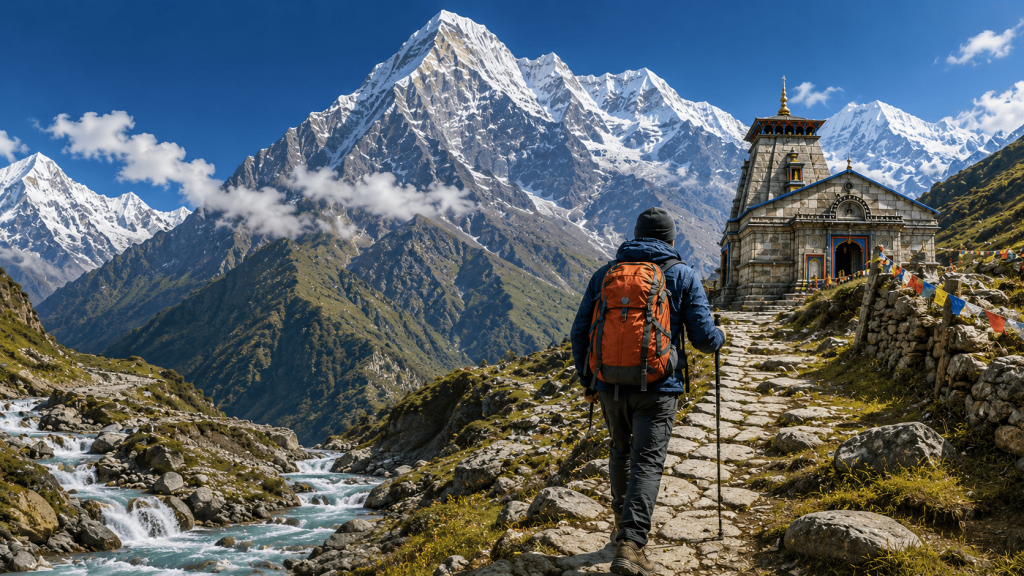
Panch Kedar Yatra Guide 2026 | History, Trek, Route & Darshan
25 July 2026 by admin
Panch Kedar Yatra: Complete Guide to History, Mythology, Trek Routes, Darshan, Travel Tips & Yatra 2026

Introduction
The Panch Kedar Yatra/Trek is one of the most sacred and rewarding pilgrimages dedicated to Lord Shiva in India. Nestled in the Garhwal Himalayas of Uttarakhand, the Panch Kedar temples attract thousands of devotees, trekkers, photographers, and nature lovers every year. Unlike many religious journeys that involve only road travel, the Panch Kedar Yatra combines spirituality with adventure. Pilgrims walk through dense forests, alpine meadows, rushing rivers, high-altitude valleys, and snow-covered mountain trails before reaching each sacred shrine.
Each temple in the Panch Kedar trek represents a different manifestation of Lord Shiva. According to Hindu mythology, these temples became sacred after the Pandavas sought Lord Shiva’s forgiveness following the Mahabharata war. Instead of appearing before them directly, Lord Shiva transformed into a bull (Nandi) and disappeared into the earth. Different parts of His divine body emerged at five different places, which later became known as the Panch Kedar temples.
Today, the Panch Kedar Yatra stands among India’s most spiritually significant Himalayan pilgrimages. Every temple offers breathtaking scenery, peaceful surroundings, and centuries-old traditions that continue to inspire devotees.
Whether you are planning your first Himalayan trek or looking for a complete pilgrimage guide, this article covers every important detail, including the trekking routes, distances, difficulty levels, best time to visit, accommodation options, travel tips, and much more.
What is Panch Kedar Yatra?
The word Panch means five, while Kedar refers to Lord Shiva. Together, Panch Kedar represents the five sacred temples of Lord Shiva located across the Garhwal Himalayas of Uttarakhand.
These five temples are:
- Kedarnath Temple
- Tungnath Temple
- Rudranath Temple
- Madhyamaheshwar Temple
- Kalpeshwar Temple
Unlike the 12 Jyotirlingas, the Panch Kedar temples are closely connected through one legendary story from the Mahabharata.
Each temple worships a different part of Lord Shiva’s divine form.
| Temple | Divine Form Worshipped |
|---|---|
| Kedarnath | Hump of the Bull |
| Tungnath | Arms |
| Rudranath | Face |
| Madhyamaheshwar | Navel and Stomach |
| Kalpeshwar | Hair (Jata) |
Completing the Panch Kedar yatra is considered highly auspicious. Devotees believe the journey helps cleanse past sins, strengthens spiritual awareness, and brings them closer to Lord Shiva.
Panch Kedar Yatra at a Glance
| Temple | Altitude | Trek Distance | Difficulty |
|---|---|---|---|
| Kedarnath | 3,583 m | 16 km (one way) | Moderate |
| Tungnath | 3,680 m | 3.5 km | Easy to Moderate |
| Rudranath | 3,600 m | 20–24 km | Difficult |
| Madhyamaheshwar | 3,289 m | 16–18 km | Moderate to Difficult |
| Kalpeshwar | 2,200 m | 1–2 km | Easy |
Why is the Panch Kedar Yatra/Trek So Special?
The Panch Kedar Yatra/Trek is much more than a mountain expedition. It is a journey of faith, endurance, self-discovery, and devotion.
Several reasons make this pilgrimage unique.
1. Connected to the Mahabharata
Every Panch Kedar temple has a direct connection with the Pandavas and the Mahabharata. According to Hindu tradition, the Pandavas undertook this pilgrimage after the Kurukshetra war to seek forgiveness for the loss of countless lives.
2. Five Unique Forms of Lord Shiva
Unlike most Shiva temples, each Panch Kedar shrine worships a different manifestation of Lord Shiva’s body.
This makes the pilgrimage spiritually complete only after visiting all five temples.
3. Himalayan Adventure
The trek passes through:
- Dense oak forests
- Rhododendron valleys
- Himalayan bugyals (meadows)
- Snow-covered peaks
- Waterfalls
- Glacier-fed rivers
- Traditional Garhwali villages
Every route offers unforgettable Himalayan landscapes.
4. Less Crowded Than Other Pilgrimages
Kedarnath receives lakhs of pilgrims every year, while Rudranath, Madhyamaheshwar, and Kalpeshwar remain relatively peaceful.
Visitors can enjoy meditation, photography, and uninterrupted spiritual experiences.
5. Rich Spiritual Energy
Many sages and saints have meditated in these Himalayan regions for centuries.
Devotees believe the Panch Kedar temples possess powerful spiritual vibrations that create an atmosphere of peace and devotion.
Panch Kedar History
The history of Panch Kedar dates back thousands of years.
Although historians cannot determine the exact construction period of the temples, ancient Hindu scriptures and local traditions connect them to the Mahabharata era.
Later, the great philosopher Adi Shankaracharya revived many Himalayan temples, including Kedarnath. His efforts helped preserve the pilgrimage traditions that continue today.
The stone architecture of the Panch Kedar temples reflects the ancient Himalayan temple style.
Despite harsh winters, earthquakes, and changing weather, these temples have stood strong for centuries.
Panch Kedar Yatra Mythology
The mythology behind Panch Kedar is one of the most fascinating stories in Hinduism.
The Story Begins After the Mahabharata War
After defeating the Kauravas in the Kurukshetra war, the Pandavas carried the burden of killing their own relatives, teachers, and countless warriors.
Although the war upheld dharma, the Pandavas wished to seek forgiveness from Lord Shiva.
They first traveled to Kashi (Varanasi).
Lord Shiva, however, did not want to meet them immediately because He was displeased with the destruction caused during the war.
Instead, He left Kashi and traveled to the Garhwal Himalayas.
Lord Shiva Took the Form of a Bull
The Pandavas continued searching for Him.
Eventually, Bhima spotted a mysterious bull grazing among other cattle.
As Bhima approached, the bull tried to disappear into the ground.
Bhima quickly grabbed the bull.
Instead of remaining in one place, the bull vanished beneath the earth.
Its divine body appeared at five different locations.
These sacred places later became the part of Panch Kedar Yatra.
Appearance of Lord Shiva
Kedarnath
- Hump appeared.
Tungnath
- Arms emerged.
Rudranath
- Face appeared.
Madhyamaheshwar
- Navel and stomach emerged.
Kalpeshwar
- Hair (Jata) appeared.
Pashupatinath Connection
According to another tradition, the remaining part of Lord Shiva’s body appeared at the famous Pashupatinath Temple in Nepal.
This story creates a sacred connection between Panch Kedar and Pashupatinath.
Spiritual Significance of Panch Kedar Yatra
Every temple represents a different aspect of Lord Shiva’s cosmic energy.
Many devotees complete the Panch Kedar Yatra to:
- Seek forgiveness for past actions.
- Attain inner peace.
- Strengthen devotion toward Lord Shiva.
- Experience meditation in the Himalayas.
- Receive blessings for health, prosperity, and spiritual growth.
- Continue a family pilgrimage tradition.
Many pilgrims also combine Panch Kedar Yatra with the Char Dham Yatra for a more complete spiritual journey.
List of Panch Kedar Temples
1. Kedarnath Temple
- Elevation: 3,583 meters
- District: Rudraprayag
- Trek Distance: 16 km
- Opening Months: May to November
- Famous For: One of the 12 Jyotirlingas and the hump of Lord Shiva.
Kedarnath is the most visited temple in the Panch Kedar circuit.
2. Tungnath Temple
- Elevation: 3,680 meters
- District: Rudraprayag
- Trek Distance: 3.5 km
- Famous For: World’s highest Shiva temple.
Many trekkers continue to Chandrashila Peak after visiting Tungnath.
3. Rudranath Temple
- Elevation: Approximately 3,600 meters
- District: Chamoli
- Trek Distance: 20–24 km (depending on the route)
- Famous For: Natural rock temple where Lord Shiva’s face is worshipped.
Rudranath offers one of the most scenic yet challenging treks in Uttarakhand.
4. Madhyamaheshwar Temple
- Elevation: 3,289 meters
- District: Rudraprayag
- Trek Distance: 16–18 km
- Famous For: Worship of Lord Shiva’s navel.
The temple stands amid lush green meadows and snow-capped Himalayan peaks.
5. Kalpeshwar Temple
- Elevation: Around 2,200 meters
- District: Chamoli
- Trek Distance: 1–2 km
- Famous For: Lord Shiva’s matted hair (Jata).
Kalpeshwar remains open throughout the year, making it the only Panch Kedar temple accessible in every season.
Where Are the Panch Kedar Temples Located?
All five temples lie in the Garhwal region of Uttarakhand.
District-Wise Locations
- Kedarnath – Rudraprayag District
- Tungnath – Rudraprayag District
- Rudranath – Chamoli District
- Madhyamaheshwar – Rudraprayag District
- Kalpeshwar – Chamoli District
The pilgrimage usually begins from Haridwar or Rishikesh, which serve as the main gateways to the Garhwal Himalayas.
Panch Kedar Trek Route Overview
Although each temple has a separate trekking route, pilgrims often complete the yatra in this traditional order:
- Kedarnath
- Tungnath
- Rudranath
- Madhyamaheshwar
- Kalpeshwar
This sequence follows long-standing pilgrimage traditions and is commonly preferred by devotees.
How Many Days Are Required for the Panch Kedar Trek?
The total duration depends on your fitness level, weather conditions, and travel plan.
Suggested Duration
| Trek Type | Days Required |
|---|---|
| Fast-paced itinerary | 8–10 days |
| Comfortable pilgrimage | 12–14 days |
| Leisurely exploration | 15–18 days |
Most travelers choose a 12–14-day itinerary to allow time for acclimatization, sightseeing, and proper rest between treks.
Total Trek Distance of Panch Kedar
The approximate trekking distance for all five temples combined ranges between 55 and 65 kilometers, depending on the routes selected.
Road travel between the trek starting points adds several hundred kilometers, so careful planning is essential.
1. Kedarnath Trek Guide

Overview
Kedarnath Temple is the first and most important temple in the Panch Kedar pilgrimage. It is also one of the 12 Jyotirlingas of Lord Shiva, making it one of the holiest Shiva temples in India.
Located beside the Mandakini River and surrounded by snow-covered Himalayan peaks, Kedarnath offers a unique combination of spirituality and natural beauty.
Quick Information
| Details | Information |
|---|---|
| Elevation | 3,583 meters (11,755 feet) |
| Trek Distance | 16 km (One Way) |
| Starting Point | Gaurikund |
| Difficulty | Moderate |
| Trek Duration | 6–9 Hours |
| Best Time | May–June & September–October |
How to Reach Kedarnath Trek Starting Point
By Air
The nearest airport is Jolly Grant Airport, Dehradun, about 220 km from Gaurikund.
By Train
Nearest railway stations:
- Rishikesh
- Haridwar
- Dehradun
By Road
Regular buses and taxis operate from:
- Haridwar
- Rishikesh
- Dehradun
Travel route:
Haridwar → Rishikesh → Devprayag → Srinagar → Rudraprayag → Agastyamuni → Guptkashi → Sonprayag → Gaurikund
Kedarnath Trek Route
The trek begins from Gaurikund.
Main points on the trail:
- Gaurikund
- Jungle Chatti
- Bheembali
- Linchauli
- Kedarnath Base Camp
- Kedarnath Temple
The trail remains well-paved and receives regular maintenance.
Trek Difficulty
Difficulty Level:
Moderate
Reasons:
- Continuous ascent
- High altitude
- Cold weather
- Thin oxygen near the temple
The trail suits beginners with reasonable fitness.
Facilities Along the Trek
Available facilities include:
- Food stalls
- Tea shops
- Toilets
- Drinking water
- Medical camps
- Oxygen support
- Pony service
- Palki service
- Helicopter service
Accommodation
Options include:
- GMVN Guest Houses
- Budget hotels
- Dharamshalas
- Luxury camps
- Private lodges
Advance booking is strongly recommended during the pilgrimage season.
Mobile Network
Networks with the best coverage:
- BSNL
- Jio (limited)
- Airtel (partial)
Internet connectivity may remain unreliable.
Weather
Summer
Temperature:
5°C–18°C
Ideal for trekking.
Monsoon
Frequent rainfall.
Landslides may disrupt travel.
Autumn
Clear skies.
Excellent mountain views.
Winter
Heavy snowfall.
Temple remains closed.
Nearby Attractions
- Bhairavnath Temple
- Gandhi Sarovar
- Vasuki Tal
- Chorabari Glacier
- Shankaracharya Samadhi
Travel Tips
- Start early in the morning.
- Carry rain protection.
- Stay hydrated.
- Walk slowly.
- Spend a night near Gaurikund before beginning the trek.
2. Tungnath Trek Guide

Overview
Tungnath Temple is the highest Shiva temple in the world. The trek is short but incredibly scenic.
Many trekkers continue to Chandrashila Peak, one of Uttarakhand’s finest viewpoints.
Quick Information
| Details | Information |
|---|---|
| Elevation | 3,680 meters |
| Trek Distance | 3.5 km |
| Starting Point | Chopta |
| Difficulty | Easy to Moderate |
| Trek Duration | 2–3 Hours |
Trek Route
Chopta
↓
Forest Trail
↓
Tungnath Temple
↓
Chandrashila Summit (Optional)
Trail Highlights
- Rhododendron forests
- Himalayan meadows
- Snow during spring
- Panoramic Himalayan views
Visible peaks include:
- Nanda Devi
- Chaukhamba
- Trishul
- Kedarnath Peak
Difficulty Level
Easy to Moderate.
Suitable for:
- Families
- First-time trekkers
- Senior citizens with good fitness
- Children
Accommodation
Stay options in Chopta include:
- Hotels
- Eco camps
- Homestays
- Wooden cottages
Many visitors stay overnight to watch the sunrise from Chandrashila.
Food
Available at:
- Chopta
- Trail tea stalls
- Temple area
Simple vegetarian meals are common.
Mobile Network
Network availability:
- BSNL
- Jio
- Airtel (limited)
Signal strength varies.
Best Time
Summer
Pleasant weather.
Monsoon
Lush greenery.
Winter
Heavy snowfall attracts snow trekkers.
Travel Tips
- Begin the trek before sunrise.
- Carry warm clothing throughout the year.
- Continue to Chandrashila if weather permits.
- Wear trekking shoes with good grip.
3. Rudranath Trek Guide

Overview
Rudranath is the most challenging temple in the Panch Kedar circuit.
The temple sits inside a natural rock cave surrounded by alpine meadows and dense forests.
The face of Lord Shiva is worshipped here.
Quick Information
| Details | Information |
|---|---|
| Elevation | About 3,600 meters |
| Trek Distance | 20–24 km |
| Starting Point | Sagar Village |
| Difficulty | Difficult |
| Trek Duration | 7–10 Hours |
Trek Routes
Popular routes include:
Route 1
Sagar Village
↓
Panar Bugyal
↓
Pitradhar
↓
Rudranath
Route 2
Mandal
↓
Anusuya Devi Temple
↓
Rudranath
The Sagar route is the most popular.
Difficulty
Difficulty:
Difficult
Reasons include:
- Long trekking distance
- Steep climbs
- Rocky terrain
- High altitude
- Remote location
Previous trekking experience is beneficial.
Scenic Beauty
Highlights include:
- Panar Bugyal
- Oak forests
- Alpine flowers
- Waterfalls
- Himalayan wildlife
- Snow peaks
Accommodation
Available at:
- Panar
- Temple area
- Basic lodges
- GMVN camps
- Local homestays
Luxury accommodation is not available.
Food
Simple meals include:
- Dal
- Rice
- Roti
- Tea
- Maggi
- Seasonal vegetables
Carry dry snacks for the trek.
Network
Mobile signals remain weak.
BSNL offers the best chance of connectivity.
Offline maps are highly recommended.
Weather
Morning:
Pleasant.
Afternoon:
Clouds often develop.
Evening:
Temperature drops quickly.
Night:
Cold throughout the season.
Travel Tips
- Start trekking before sunrise.
- Carry enough drinking water.
- Trek with a guide if unfamiliar with the route.
- Avoid trekking after dark.
4. Madhyamaheshwar Trek Route

The trek starts from Ransi Village.
Route:
Ransi
↓
Gaundar
↓
Bantoli
↓
Khatara
↓
Madhyamaheshwar Temple
The trail follows beautiful rivers, suspension bridges, oak forests, waterfalls, and alpine meadows before reaching the temple.
Trek Difficulty
Difficulty:
Moderate to Difficult
Reasons include:
- Continuous uphill climb
- Long trekking distance
- Rocky mountain trails
- High altitude
- Steep sections near the temple
People with average fitness can complete the trek comfortably after proper preparation.
Facilities Along the Trek
Available facilities include:
- Homestays
- Small tea stalls
- Drinking water points
- Local restaurants
- Basic medical assistance
- Rest shelters
- Mule services (limited)
ATM facilities are not available on the trekking route.
Carry sufficient cash before reaching Ransi.
Accommodation
Accommodation is available at:
- Ransi Village
- Gaundar
- Madhyamaheshwar Temple Area
Options include:
- GMVN Tourist Rest House
- Local homestays
- Budget lodges
- Guest houses
Advance booking is recommended during May, June, September, and October.
Mobile Network
Network connectivity is limited.
Available networks include:
- BSNL (Best coverage)
- Jio (Partial)
- Airtel (Very limited)
Internet services remain unreliable.
Download offline maps before beginning the trek.
Weather
Summer (May–June)
Temperature:
8°C–18°C
Ideal weather for trekking.
Monsoon (July–August)
Heavy rainfall.
Slippery trails and landslides are possible.
Avoid trekking during this season.
Autumn (September–October)
Pleasant temperatures.
Crystal-clear mountain views.
Excellent trekking conditions.
Winter (November–April)
Heavy snowfall.
The temple remains closed during winter.
The deity is worshipped at Ukhimath.
Nearby Attractions
- Budha Madhyamaheshwar
- Chaukhamba Peak Viewpoint
- Gaundar Village
- Bantoli Valley
- Kanchani Tal (for experienced trekkers)
Travel Tips
- Stay overnight at Ransi before beginning the trek.
- Start trekking before sunrise.
- Visit Budha Madhyamaheshwar for sunrise views.
- Carry trekking poles for steep climbs.
- Pack warm clothing, even during summer.
- Keep energy bars and sufficient drinking water.
- Respect local customs and avoid littering.
5. Kalpeshwar Trek Guide

Overview
Kalpeshwar Temple is the fifth and final temple of the Panch Kedar pilgrimage.
Unlike the other four temples, Kalpeshwar remains open throughout the year, making it the only Panch Kedar shrine accessible in every season.
Lord Shiva’s matted hair (Jata) is worshipped inside a naturally formed cave temple.
The surrounding Urgam Valley is famous for its peaceful atmosphere, apple orchards, terraced farms, waterfalls, and traditional Garhwali villages.
Quick Information
| Details | Information |
|---|---|
| Elevation | 2,200 meters (7,217 feet) |
| Trek Distance | 1–2 km |
| Starting Point | Urgam Village |
| Difficulty | Easy |
| Trek Duration | 30–60 Minutes |
| Best Time | Throughout the Year |
How to Reach Kalpeshwar
By Air
The nearest airport is Jolly Grant Airport, Dehradun, located approximately 265 km from Kalpeshwar.
The airport offers regular flights from Delhi and several major Indian cities.
From Dehradun Airport, hire a taxi or travel by bus to Joshimath or Helang.
Continue the journey by road to Urgam Village, followed by a short trek to Kalpeshwar Temple.
By Train
The nearest railway stations are:
- Haridwar Railway Station
- Rishikesh Railway Station
Both stations have excellent rail connectivity with Delhi, Mumbai, Kolkata, Ahmedabad, Jaipur, Lucknow, and many other cities.
From Haridwar or Rishikesh, buses and taxis regularly operate towards Helang via Chamoli and Joshimath.
By Road
Kalpeshwar is the easiest Panch Kedar temple to reach.
Road route:
Haridwar → Rishikesh → Devprayag → Srinagar → Rudraprayag → Karnaprayag → Chamoli → Helang → Urgam Village
From Helang, a well-maintained mountain road of around 10–12 km reaches Urgam Village.
The final 1–2 km is an easy walk through beautiful farmlands, forests, and village pathways before reaching Kalpeshwar Temple.
State-run buses, private buses, taxis, and shared jeeps regularly operate up to Helang.
Kalpeshwar Trek Route
Urgam Village
↓
Forest Trail
↓
Kalpeshwar Temple
The trail follows a gentle ascent through scenic villages, streams, and terraced fields.
Most visitors complete the trek within one hour.
Trek Difficulty
Difficulty:
Easy
Suitable for:
- Families
- Children
- Senior citizens
- Beginners
- Spiritual pilgrims
No previous trekking experience is required.
Facilities Along the Trek
Facilities include:
- Tea stalls
- Small restaurants
- Drinking water
- Homestays
- Local guides
- Basic medical assistance
The route remains comfortable compared to the other Panch Kedar treks.
Accommodation
Accommodation is available at:
- Urgam Village
- Helang
- Joshimath
Options include:
- Homestays
- Guest houses
- Budget hotels
- Small lodges
Joshimath offers premium hotels for travelers seeking more comfort.
Mobile Network
Network availability is better than at most Panch Kedar temples.
Available operators include:
- Jio
- BSNL
- Airtel (limited)
Internet speeds may fluctuate depending on the weather.
Weather
Summer
Temperature:
12°C–22°C
Pleasant weather.
Monsoon
The valley becomes lush green.
Occasional landslides may affect road travel.
Autumn
Cool temperatures.
Clear Himalayan views.
Ideal for sightseeing and photography.
Winter
Kalpeshwar remains open.
Light to moderate snowfall may occur in surrounding areas.
Road access generally remains available.
Nearby Attractions
- Urgam Valley
- Dhyan Badri Temple
- Joshimath
- Helang
- Kalp Ganga River
Travel Tips
- Spend time exploring Urgam Valley.
- Carry cash, as ATM facilities are limited.
- Wear comfortable walking shoes.
- Respect the peaceful environment inside the cave temple.
- Visit nearby villages to experience traditional Garhwali culture.
- Combine Kalpeshwar with a visit to Dhyan Badri for a richer spiritual journey.
Panch Kedar Trek Route Map

The Panch Kedar temples are spread across the Garhwal Himalayas of Uttarakhand. Since each temple has a different base village, pilgrims travel by road between trek starting points.
Complete Route
Haridwar
↓
Rishikesh
↓
Devprayag
↓
Srinagar
↓
Dhari Devi Temple (Optional but Popular)
↓
Rudraprayag
↓
Guptkashi
↓
Sonprayag
↓
Gaurikund
↓
Kedarnath Trek
↓
Return to Sonprayag
↓
Ukhimath
↓
Chopta
↓
Tungnath Trek
↓
Sagar Village
↓
Rudranath Trek
↓
Ransi Village
↓
Madhyamaheshwar Trek
↓
Helang
↓
Urgam Village
↓
Kalpeshwar Trek
↓
Joshimath
↓
Rishikesh
↓
Haridwar
Suggested 10-Day Panch Kedar Itinerary
Suitable for experienced travelers with limited time.
| Day | Plan |
|---|---|
| Day 1 | Haridwar → Guptkashi |
| Day 2 | Kedarnath Trek |
| Day 3 | Return from Kedarnath → Chopta |
| Day 4 | Tungnath & Chandrashila |
| Day 5 | Sagar Village |
| Day 6 | Rudranath Trek |
| Day 7 | Ransi Village |
| Day 8 | Madhyamaheshwar Trek |
| Day 9 | Kalpeshwar Temple |
| Day 10 | Return to Haridwar |
Suggested 12-Day Panch Kedar Itinerary (Recommended)
Most pilgrims choose this itinerary because it provides enough time for acclimatization and rest.
| Day | Plan |
|---|---|
| Day 1 | Haridwar to Guptkashi |
| Day 2 | Kedarnath Trek |
| Day 3 | Kedarnath Darshan & Return |
| Day 4 | Chopta |
| Day 5 | Tungnath & Chandrashila |
| Day 6 | Sagar Village |
| Day 7 | Rudranath Trek |
| Day 8 | Return from Rudranath |
| Day 9 | Ransi Village |
| Day 10 | Madhyamaheshwar |
| Day 11 | Kalpeshwar |
| Day 12 | Return Journey |
Suggested 14-Day Panch Kedar Itinerary
Ideal for photographers, families, and pilgrims who want a relaxed journey.
This itinerary includes:
- Rest days
- Local sightseeing
- Sunrise photography
- Village exploration
- Dhari Devi Temple visit
- Budha Madhyamaheshwar
- Chandrashila Summit
Best Time to Visit Panch Kedar
The Panch Kedar temples remain open only for a limited period each year (except Kalpeshwar).
The ideal months are:
- May
- June
- September
- October
These months provide pleasant weather, stable trekking conditions, and excellent mountain views.
Panch Kedar Weather Guide (Month-Wise)
April
- Snow begins to melt.
- Some trekking routes may still have snow patches.
- Higher-altitude trails can remain challenging.
Average Temperature:
0°C to 10°C
May
One of the best months.
- Pleasant weather
- Clear skies
- Comfortable trekking conditions
- Temple doors open for pilgrims
Temperature:
5°C–18°C
June
Excellent trekking season.
- Longer daylight hours
- Comfortable temperatures
- High pilgrimage activity
Temperature:
8°C–20°C
July
Monsoon begins.
Heavy rainfall can cause:
- Landslides
- Road closures
- Slippery trails
- Flash floods
Not recommended.
August
Rainfall continues.
Mountain weather remains unpredictable.
Travel only if absolutely necessary.
September
One of the finest months.
Visitors enjoy:
- Crystal-clear Himalayan views
- Green valleys
- Pleasant temperatures
- Reduced crowds compared to June
Temperature:
6°C–18°C
October
Another excellent month.
- Cold mornings
- Pleasant afternoons
- Excellent visibility
- Autumn colors
Temperature:
2°C–15°C
November
Temple closing ceremonies take place.
Snowfall may begin.
Higher-altitude routes become difficult.
December to March
Most Panch Kedar temples remain closed due to heavy snowfall.
Only Kalpeshwar stays open throughout the year.
Panch Kedar Trek Difficulty Level
| Temple | Difficulty |
|---|---|
| Kedarnath | Moderate |
| Tungnath | Easy to Moderate |
| Rudranath | Difficult |
| Madhyamaheshwar | Moderate to Difficult |
| Kalpeshwar | Easy |
Overall Panch Kedar Difficulty:
Moderate to Difficult
The pilgrimage requires good physical fitness, especially for Rudranath and Madhyamaheshwar.
Panch Kedar Registration
Registration is recommended for a smooth pilgrimage experience.
Pilgrims should carry:
- Aadhaar Card or another valid government-issued photo ID
- Passport (for foreign nationals)
- Mobile number
- Passport-size photographs
- Emergency contact details
Depending on the season and government guidelines, registration for Char Dham pilgrims may also apply to certain routes that overlap with Panch Kedar, especially Kedarnath. Always verify the latest requirements before departure.
Accommodation Guide
Accommodation options vary across the Panch Kedar circuit.
Available choices include:
GMVN Tourist Rest Houses
Best for:
- Families
- Pilgrims
- Budget travelers
Homestays
Available in:
- Chopta
- Ransi
- Urgam
- Gaundar
- Sagar
Ideal for experiencing Garhwali hospitality.
Hotels
Available at:
- Guptkashi
- Ukhimath
- Joshimath
- Rudraprayag
- Srinagar
Suitable for travelers seeking additional comfort.
Camps
Popular in:
- Chopta
- Kedarnath Base
- Rudranath Route
Estimated Panch Kedar Trek Cost
The total cost depends on travel style, accommodation, and transportation.
Budget Trip
₹18,000–₹25,000 per person
Includes:
- Shared transport
- Budget hotels
- Homestays
- Local food
Mid-Range Trip
₹30,000–₹45,000 per person
Includes:
- Private taxis
- Comfortable hotels
- Better dining options
Luxury Trip
₹50,000–₹80,000+ per person
Includes:
- Premium hotels
- Private vehicle
- Helicopter option for Kedarnath (if chosen)
- Personalized travel arrangements
What to Pack for the Panch Kedar Trek
Packing wisely is essential because weather conditions can change rapidly in the Himalayas.
Clothing
- Thermal innerwear
- Down jacket
- Fleece jacket
- Waterproof jacket
- Trekking pants
- Extra socks
- Woollen cap
- Sun hat
- Gloves
- Rain poncho
Footwear
- Waterproof trekking shoes
- Comfortable sandals
- Spare shoelaces
Personal Essentials
- Sunglasses with UV protection
- Sunscreen (SPF 50+)
- Lip balm
- Water bottle
- Trekking pole
- Headlamp or torch
- Power bank
- Personal medications
- Energy bars
- Dry fruits
Important Documents
Carry both digital and physical copies of:
- Aadhaar Card or passport
- Hotel bookings
- Emergency contacts
- Medical prescriptions
- Registration confirmation (if applicable)
Food Availability
Vegetarian food is widely available throughout the Panch Kedar route.
Common meals include:
- Dal
- Rice
- Roti
- Sabzi
- Maggi
- Tea
- Coffee
- Paratha
- Khichdi
Local Garhwali dishes are available in villages and homestays.
Avoid carrying excessive food to reduce backpack weight, but always keep high-energy snacks for long trekking stretches.
Drinking Water
Drinking water is available at many villages and rest stops.
To stay safe:
- Refill bottles only from trusted sources.
- Use a portable water filter or purification tablets if needed.
- Stay hydrated throughout the trek.
ATM Availability
ATMs are available at:
- Haridwar
- Rishikesh
- Srinagar
- Rudraprayag
- Guptkashi
- Joshimath
No ATM facilities are available on most trekking routes.
Carry enough cash before reaching the base villages.
Fuel Stations
Fuel stations are available in:
- Rishikesh
- Srinagar
- Rudraprayag
- Guptkashi
- Chamoli
- Joshimath
Fill your vehicle whenever possible, as fuel stations become less frequent in remote mountain areas.
Mobile Network
The best-performing networks across the Panch Kedar region are:
- BSNL
- Jio
Airtel provides coverage in some towns but may lose signal on higher-altitude trekking routes.
Internet connectivity remains inconsistent in many areas.
Download offline maps and save important travel information before your journey.
Medical Facilities
Primary medical facilities are available in:
- Guptkashi
- Rudraprayag
- Joshimath
- Ukhimath
Basic first-aid support and temporary medical camps may operate during the pilgrimage season near major trekking routes, especially around Kedarnath.
Carry a personal medical kit with:
- Pain relievers
- Bandages
- Antiseptic cream
- ORS packets
- Medicines for altitude-related discomfort (after consulting a doctor)
- Prescription medications
Fitness Preparation Before the Trek
Preparing your body in advance makes the journey safer and more enjoyable.
Start training at least 4–6 weeks before departure.
Recommended activities:
- Brisk walking (5–7 km daily)
- Stair climbing
- Light jogging
- Squats and lunges
- Core-strength exercises
- Breathing exercises
- Yoga and stretching
Gradually increase your endurance instead of pushing too hard in a short period.
Safety Tips
- Start each trek early in the morning.
- Check the weather forecast before setting out.
- Stay on marked trails.
- Avoid trekking alone on remote routes.
- Inform your accommodation about your trekking plan.
- Carry a flashlight, whistle, and basic first-aid kit.
- Respect wildlife and avoid disturbing the natural environment.
- Do not leave plastic waste on the trails.
- Acclimatize properly if you experience symptoms of altitude sickness.
- Follow instructions from local authorities and temple management.
Frequently Asked Questions (FAQs)
1. What is Panch Kedar?
Panch Kedar refers to the five sacred temples of Lord Shiva located in the Garhwal Himalayas of Uttarakhand:
- Kedarnath
- Tungnath
- Rudranath
- Madhyamaheshwar
- Kalpeshwar
Each temple represents a different part of Lord Shiva’s divine form according to Hindu mythology.
2. Why is it called Panch Kedar?
“Panch” means five, while “Kedar” refers to Lord Shiva. Together, Panch Kedar means the five sacred Shiva temples.
3. Which is the first temple of Panch Kedar?
Traditionally, pilgrims begin with Kedarnath, followed by:
- Kedarnath
- Tungnath
- Rudranath
- Madhyamaheshwar
- Kalpeshwar
4. Is Kedarnath part of Panch Kedar?
Yes.
Kedarnath is both:
- One of the 12 Jyotirlingas
- The first temple of Panch Kedar
5. How many days are required for Panch Kedar Trek?
Most pilgrims require:
- 10 Days (Fast Trip)
- 12 Days (Recommended)
- 14–15 Days (Comfortable Journey)
6. What is the total trekking distance?
The total trekking distance is approximately 55–65 km, depending on the routes chosen.
7. Which Panch Kedar trek is the most difficult?
Rudranath Trek is widely regarded as the most challenging because of its long distance, steep ascents, and remote terrain.
8. Which Panch Kedar temple is the easiest to visit?
Kalpeshwar Temple.
It involves only a short trek of about 1–2 km from Urgam Village.
9. Which is the highest Panch Kedar temple?
Tungnath Temple, at 3,680 meters, is the highest Shiva temple in the world.
10. Which Panch Kedar temple remains open throughout the year?
Kalpeshwar Temple.
The other four temples close during winter.
11. Is registration required?
Registration requirements can change based on government guidelines.
For Kedarnath, registration is generally required during the pilgrimage season. Always check the latest official Uttarakhand pilgrimage guidelines before traveling.
12. Can beginners complete Panch Kedar Trek?
Yes.
Beginners with good physical fitness and proper preparation can complete the pilgrimage.
13. Can senior citizens visit Panch Kedar?
Yes.
However, senior citizens should:
- Consult a doctor before the journey.
- Choose a comfortable itinerary.
- Avoid rushing.
- Consider pony or palki services where available.
14. Can children join the trek?
Children with good health and adequate stamina can participate, especially on shorter treks like Tungnath and Kalpeshwar.
15. Is the Panch Kedar Trek safe?
Yes.
The trek is generally safe when you:
- Follow weather updates.
- Trek during the recommended season.
- Stay on marked trails.
- Follow local advisories.
16. What is the best month to visit?
The best months are:
- May
- June
- September
- October
17. Can I visit during monsoon?
Monsoon travel is not recommended due to:
- Landslides
- Flash floods
- Slippery trails
- Road closures
18. Is camping allowed?
Camping is permitted only in designated areas.
Always follow local regulations and avoid camping near temple premises unless specifically allowed.
19. Is photography allowed?
Photography is generally allowed outside temple sanctums.
Inside the sanctum (Garbhagriha), photography is usually prohibited. Respect local rules and temple authorities.
20. Are guides necessary?
Guides are optional for Kedarnath and Tungnath but highly recommended for Rudranath, especially if you are unfamiliar with the route.
Panch Kedar Trek Tips for First-Time Pilgrims
Start Physical Preparation Early
Begin fitness training at least one month before your trip.
Daily walking, stair climbing, yoga, and breathing exercises can improve endurance.
Start Treks Early
Begin trekking between 5:00 AM and 7:00 AM whenever possible.
Morning hours offer:
- Better weather
- Cooler temperatures
- More daylight
- Safer trekking conditions
Pack Light
Carry only essential items.
A lighter backpack reduces fatigue and improves comfort.
Stay Hydrated
Drink water regularly, even if you do not feel thirsty.
High-altitude trekking increases the risk of dehydration.
Walk at a Comfortable Pace
Avoid rushing.
A steady pace conserves energy and helps with acclimatization.
Respect Nature
Keep the Himalayas clean.
Avoid plastic waste and carry reusable bottles and bags.
Respect Local Traditions
Wear modest clothing.
Maintain silence inside temple premises.
Follow temple customs and instructions.
Common Mistakes to Avoid
Many first-time pilgrims make avoidable mistakes that affect their journey.
Avoid the following:
- Ignoring weather forecasts.
- Wearing new or unsuitable shoes.
- Carrying excessive luggage.
- Skipping warm clothing.
- Starting the trek late in the day.
- Neglecting physical preparation.
- Underestimating high-altitude conditions.
- Leaving waste on the trails.
- Depending entirely on mobile networks.
- Forgetting cash for remote villages.
Responsible Trekking Guidelines
Help preserve the fragile Himalayan ecosystem by following these practices:
- Carry reusable water bottles.
- Avoid single-use plastics.
- Dispose of waste responsibly.
- Stay on designated trekking paths.
- Do not disturb wildlife.
- Respect local communities and their traditions.
- Use eco-friendly toiletries whenever possible.
- Support local businesses, homestays, and guides.
Responsible tourism ensures these sacred places remain beautiful for future generations.
Photography Tips
The Panch Kedar region offers exceptional opportunities for landscape and nature photography.
For the best results:
- Capture sunrise and sunset for soft natural light.
- Carry spare batteries, as cold weather reduces battery life.
- Protect your camera from rain and dust.
- Avoid using flash inside temples.
- Be mindful of other pilgrims while taking photographs.
Solo Travel Tips
Solo travelers should:
- Inform family members about their itinerary.
- Keep emergency contact numbers handy.
- Avoid trekking alone after sunset.
- Stay at trusted accommodations.
- Carry offline maps and a power bank.
- Join other trekkers on remote routes when possible.
Family Travel Tips
Families traveling with children or elderly members should:
- Plan shorter travel days.
- Include rest days in the itinerary.
- Carry necessary medications.
- Choose comfortable accommodations.
- Keep warm clothing and rain gear readily accessible.
- Stay flexible if weather conditions change.
Spiritual Significance of Completing the Panch Kedar Yatra
The Panch Kedar Yatra is more than a trekking expedition.
It is a journey of faith, humility, and self-discovery.
According to Hindu belief, the pilgrimage symbolizes:
- Seeking forgiveness for past actions.
- Surrendering one’s ego before Lord Shiva.
- Strengthening devotion.
- Experiencing inner peace through the Himalayan environment.
- Connecting with ancient traditions passed down through generations.
Each temple represents a unique aspect of Lord Shiva’s divine presence. Completing all five visits is believed to deepen spiritual understanding and inspire a life guided by humility and devotion.
Why You Should Visit Panch Kedar at Least Once
The Panch Kedar Yatra offers a rare combination of:
- Ancient temples
- Sacred mythology
- Himalayan trekking
- Scenic landscapes
- Spiritual reflection
- Traditional Garhwali culture
- Adventure and personal achievement
Whether you seek religious fulfillment, natural beauty, or a memorable trekking experience, Panch Kedar offers something meaningful for every traveler.
Final Conclusion
The Panch Kedar Trek is one of India’s most extraordinary pilgrimage routes. Stretching across the Garhwal Himalayas, it combines devotion, adventure, and breathtaking mountain scenery into a single unforgettable journey.
From the sacred Jyotirlinga of Kedarnath to the peaceful cave shrine of Kalpeshwar, each temple tells a chapter of the legendary story of Lord Shiva and the Pandavas. Along the way, you cross alpine meadows, ancient forests, mountain villages, suspension bridges, and high-altitude trails that reveal the timeless beauty of Uttarakhand.
Good preparation is the key to a successful pilgrimage. Choose the right season, train your body, pack thoughtfully, respect local traditions, and travel responsibly. By doing so, you can focus on what truly makes this yatra special—the opportunity to experience devotion, resilience, and the serenity of the Himalayas.
May Lord Shiva bless your Panch Kedar Yatra with a safe journey, good health, and lasting spiritual fulfillment.
Disclaimer: This guide is for informational purposes only. Travel routes, weather, temple timings, registration requirements, and local guidelines may change. Please verify the latest updates with official authorities before planning your Panch Kedar Yatra. Trek responsibly and follow all safety advisories.